
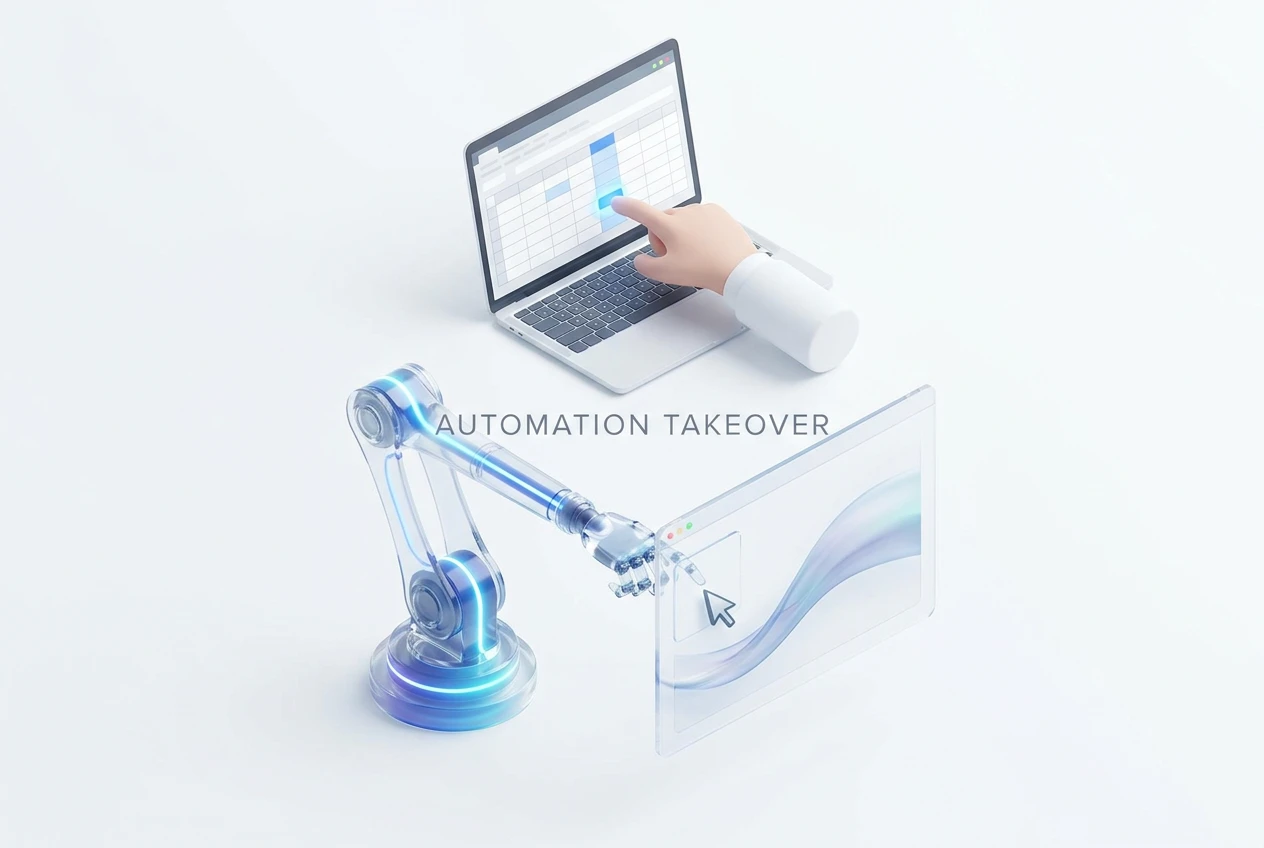
Routine tasks such as data entry, generating periodic reports, and managing emails can be fully automated using artificial intelligence. Consequently, this automation frees up employees to focus on strategic tasks. This reduces human error and increases the company’s overall productivity. As a result, companies achieve a tangible return on investment.
What are repetitive tasks in the workplace?
Repetitive tasks are activities that employees perform on a daily or weekly basis without the need for strategic thinking. For example, these tasks include copying data between different systems, sending standard emails, or updating spreadsheets. These processes consume valuable time. Furthermore, they are often tedious and lead to a loss of focus. Therefore, these tasks are ideal candidates for routine task automation.
Why are manual processes a problem for businesses?
Manual processes are a major source of inefficiency. First, they increase the likelihood of human error, which can be extremely costly. Second, they consume employees’ time that could be invested in more valuable tasks such as strategic planning or customer service. Additionally, reliance on manual labor slows down the pace of work. This negatively impacts operational efficiency and limits a company’s ability to grow and expand rapidly.
How does automating routine tasks increase productivity?
Automating routine tasks directly contributes to increased productivity. When automated systems handle simple tasks, employees are freed up to focus on activities that require creativity and critical thinking. As a result, the quality of strategic outputs improves. Automation also operates around the clock without interruption, ensuring that work is completed faster. This accelerates business cycles and improves the company’s responsiveness to market demands.
What is the return on investment from task automation?
The return on investment (ROI) from automation is tangible and rapid. First, it reduces direct operating costs by cutting down on manual labor hours. Second, fewer errors save on the costs of correcting them. Furthermore, increased productivity allows the company to generate more revenue with the same resources. Lo-ol.AI accurately measures this return to demonstrate the true value that AI solutions add to your business.
Which departments benefit most from automation?
Almost all departments benefit from automation, but some are undergoing a greater transformation than others. For example, finance and accounting departments benefit significantly from automating invoice entry and financial reporting. Human resources departments also benefit from automating recruitment processes and employee data management. Additionally, marketing and sales departments can automate lead management and email campaigns, improving overall operational efficiency.
What tools are used to automate administrative tasks?
Tools for automating administrative tasks vary widely. These tools include robotic process automation (RPA) platforms that mimic human actions on user interfaces. There are also specialized customer relationship management (CRM) platforms and enterprise resource planning (ERP) systems that include built-in automation modules. However, custom AI solutions, such as those developed by Lowell AI, offer greater flexibility and the ability to handle complex tasks.
What are the steps to start automating daily tasks?
Getting started with automating daily tasks requires a clear methodology. Companies must follow specific steps to ensure success.
- Identify tasks: First, analyze your processes and identify repetitive, time-consuming tasks.
- Assess the impact: Second, evaluate the financial and operational impact of automating each task.
- Choose the right tool: Next, select the technical solution that best fits your needs and budget.
- Phased implementation: Start with a small pilot project to gauge results before scaling up.
- Training and monitoring: Finally, train your team on the new systems and continuously monitor performance.
How does Lo-ol.AI’s approach to automation differ?
Lo-ol.AI’s approach is characterized by a focus on integrated strategic solutions. We don’t just offer chatbots; we build custom AI agents that integrate deeply with your existing systems. First, we analyze your operations to identify the highest-return automation opportunities. Then, we develop scalable solutions that ensure a clear return on investment. Our integration-first approach means our solutions work seamlessly with your existing technical infrastructure to increase operational efficiency.
How can the success of a routine task automation project be measured?
The success of a routine task automation project can be measured through clear key performance indicators. First, measure the time saved for employees, which can be reinvested in other tasks. Second, track the reduction in error rates in automated processes. Additionally, measure the increase in the volume of work completed within the same time frame. Thus, these metrics provide concrete evidence of automation’s effectiveness and help justify the investment. You can follow our latest news on Facebook.
Frequently Asked Questions
What are some of the most common examples of routine task automation?
Common examples include scheduling social media posts, sending invoices to customers, generating weekly sales reports, categorizing incoming emails, and updating customer databases.
Does automation require advanced technical knowledge?
Not necessarily. Many modern tools come with user-friendly interfaces. However, complex projects or deep integrations require specialized expertise, which is provided by companies such as Lo-ol.AI.
How does automation affect data security?
When implemented correctly, automation can improve data security. It reduces human access to sensitive information and ensures consistent enforcement of security policies. It is important to choose a trusted partner that adheres to security best practices.
Will automation replace employees?
Automation is not intended to replace employees, but rather to enhance their capabilities. It frees them from tedious and repetitive tasks, allowing them to focus on innovation, human interaction, and solving complex problems that AI cannot handle.
What is the cost of automating repetitive tasks?
The cost varies significantly depending on the project’s size and complexity. It ranges from simple monthly subscriptions for off-the-shelf tools to larger investments in custom, integrated solutions that deliver a higher return on investment in the long term.
In conclusion, automating routine tasks is no longer a luxury but a strategic necessity for companies seeking growth. By reducing manual labor, you can achieve significant reductions in operational costs and a marked increase in efficiency. If you’re ready to transform your operations and achieve unprecedented productivity, our team at Lo-ol.AI is ready to help. Contact us today to explore how AI can work for you.