
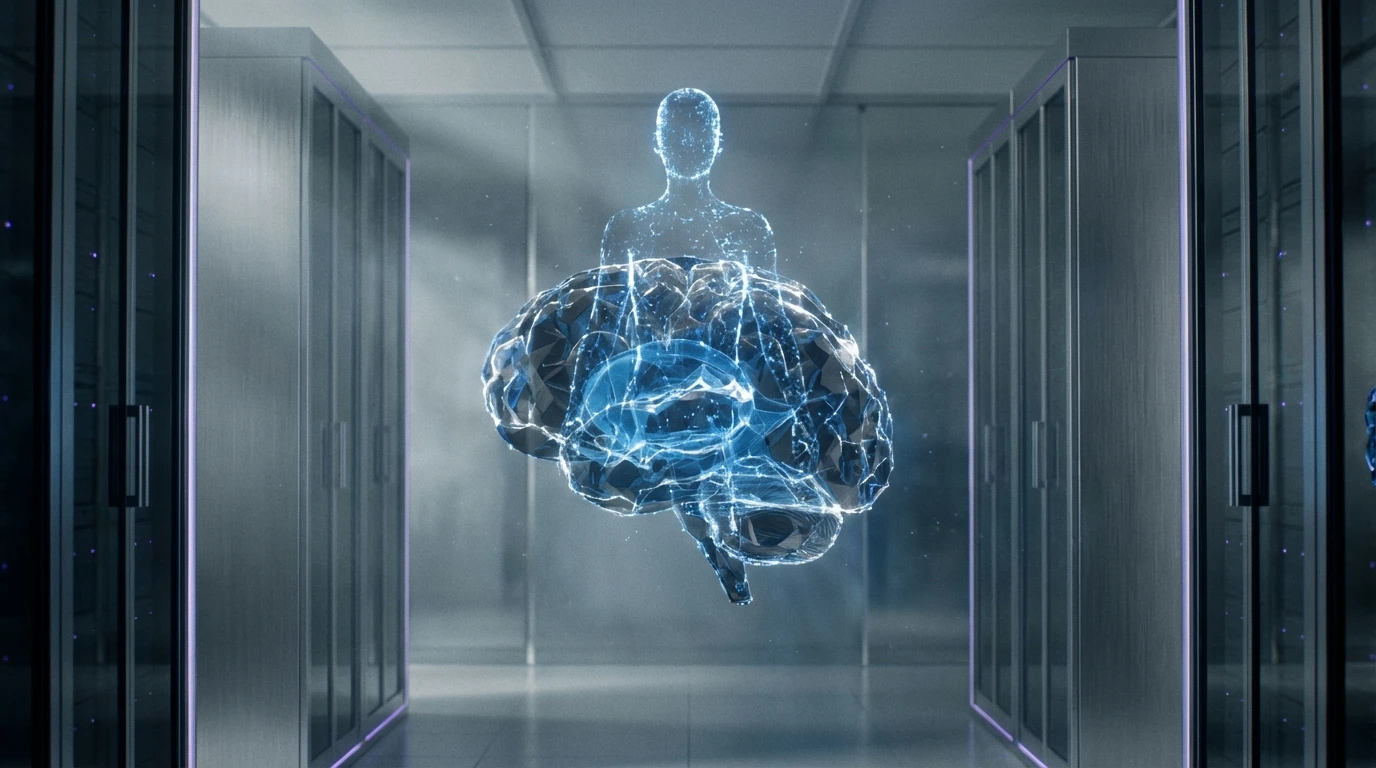
Are you facing ongoing challenges with rising operating costs and difficulty maintaining consistent service quality around the clock? Many business leaders suffer from the depletion of resources in repetitive routine tasks, which prevents human teams from focusing on development and innovation, and often leads to revenue leakage due to slow response times to customers.
The solution is no longer to hire more people to cover the shortfall, but to adopt the concept of an intelligent and trained digital employee. This virtual agent never sleeps, never asks for time off, and has the ability to process thousands of requests with extreme precision, taking your organization from operational struggle to expansion and sustainable growth.
In this guide, we will review how artificial intelligence for organizations can create a hybrid workforce that combines human creativity with machine efficiency to ensure business continuity and reduce financial waste.
What is a digital employee and why do you need one now?
An AI Digital Employee is an integrated intelligent system designed to simulate and independently perform human job roles. Unlike older automation software that follows rigid rules, this employee relies on advanced language models and contextual understanding to make instant decisions and perform complex actions within company systems.
The fundamental difference between an intelligent agent and a traditional chatbot
The two concepts are often confused, but the difference in commercial impact is vast. While a chatbot is limited to providing pre-recorded text responses, a digital employee can:
- Understand the customer’s complex intent and fluently handle local dialects (Saudi, Gulf).
- Access CRM/ERP systems to update data or actually create invoices.
- Making decisions based on predefined permissions without referring to a human supervisor at every step.
- Working proactively rather than reactively, such as sending alerts to sales when a hot opportunity is spotted.
If you are interested in seeing visual examples that illustrate this difference, you can follow our simplified explanations on Instagram to understand the mechanism in greater depth.
lo-ol.ai experts’ opinion
A digital employee is not just an automated response program, but an investment asset that evolves over time. Companies that integrate smart agents today create a competitive advantage that will be difficult to catch up with tomorrow, especially in fast-paced markets that require immediate response. It is the ideal solution to break the barrier of expansion without exorbitant hiring costs.
→ Are you ready to transform? Book a consultation to design your digital employee
Key tasks efficiently managed by a digital employee
The role of a smart agent is not limited to responding to inquiries, but extends to automating sales and complex operational processes.
1. Automating customer service and sales
A digital employee can handle thousands of simultaneous conversations, qualify leads, and book appointments directly in the calendar. This ensures that the human sales team focuses only on deals that are ready to close, significantly increasing conversion rates.
2. Back-Office Management
The smart agent sorts documents, enters data, and matches invoices with 99.9% accuracy, eliminating human errors caused by fatigue.
How do you assess your facility’s readiness to employ a smart agent?
Before you begin, you must ensure that your work environment is ready to receive this technology. Here is a quick checklist for executives:
- Identify operational pain points: Is the problem slow service or operating costs?
- Data readiness: Do you have a knowledge base or clear policies that a digital employee can be trained on?
- Integration readiness: Are your current systems API-friendly?
- Security and privacy: Ensure that your chosen solution complies with local data protection standards.
To learn more about the latest business communities adopting these technologies, join our discussions on Facebook and share your experience.
Who is this solution for?
This technology is ideal for small and medium-sized enterprises (SMEs) and large enterprises that deal with a large volume of customer interactions or data, such as the retail, logistics, healthcare, and real estate sectors. It is not suitable for micro-enterprises that do not yet have clear or recurring processes.
Frequently asked questions about digital employees
Are digital employees secure for company and customer data?
Yes, when designed professionally. Intelligent agents are built with high encryption protocols and strict compliance standards to ensure that data is not leaked or used to train general models without permission.
Does the digital employee understand local Gulf dialects?
Absolutely. Modern language processing technologies have evolved significantly and are now able to accurately understand Saudi, Gulf, and colloquial dialects, responding with the same natural tone used in your company.
Is the integration process with existing systems complicated?
No, the digital employee is designed to be a smart layer on top of your existing systems (CRM/ERP) and not a replacement for them. The connection is made through secure and seamless software interfaces without the need to completely change the infrastructure. You can start your automation journey with us today to evaluate your current infrastructure.