
Building a hybrid workforce requires identifying the tasks at which machines excel—such as analyzing big data and performing repetitive tasks—and those that require human creativity and critical thinking. This is achieved by designing new organizational structures that enable seamless collaboration between human employees and intelligent systems. Consequently, this approach significantly enhances efficiency and innovation within the company, paving the way for the future of work.
What exactly is a hybrid workforce?
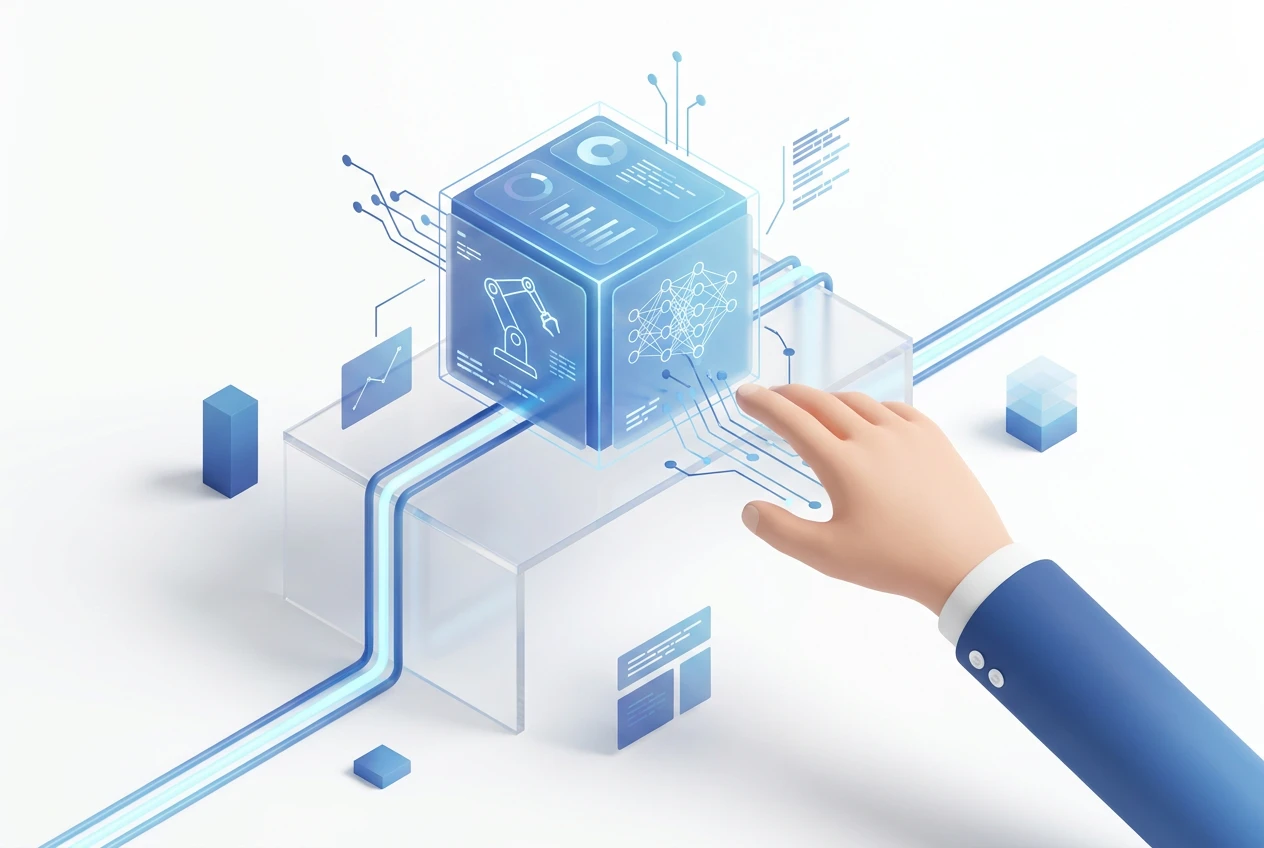
A hybrid workforce is not just remote work. It is an advanced operational model that integrates human skills with the capabilities of artificial intelligence and automation. In this model, humans and machines work as a single team. For example, digital employees handle repetitive tasks, while human employees focus on strategy and solving complex problems. Therefore, the goal is to enhance human capabilities, not replace them.
How is this different from traditional automation?
Traditional automation focuses on simple, rule-based tasks. In contrast, hybrid workforce engineering addresses the automation of complex processes that require an understanding of context and the ability to learn. These AI-enhanced teams use advanced models to make dynamic decisions. Furthermore, they enable continuous human-machine collaboration, creating a more flexible and intelligent work environment.
What are the benefits of building a hybrid workforce?
The benefits are numerous. First, it leads to a massive increase in efficiency and productivity, as intelligent systems take over time-consuming tasks. Second, it allows employees to focus on higher-value activities such as innovation and customer interaction. In addition, it improves work accuracy and reduces human error. As a result, companies achieve a measurable return on investment and sustainable growth.
What are the first steps in designing new work structures?
The first step is a comprehensive assessment of current operations. It is essential to identify which tasks can be automated and which require a human touch. Next, hybrid operating models are designed to outline how human employees will interact with digital employees. It is also essential to select the appropriate technology platforms that support this integration. Companies such as Lo-ol.AI offer end-to-end expertise in this field.
How is the success of AI-enhanced teams measured?
Success is measured through clear key performance indicators (KPIs). These include time savings, reduced operating costs, and increased productivity. Furthermore, employee satisfaction can be measured, as eliminating tedious tasks boosts morale. At Lo-ol.AI, we focus on delivering a tangible, trackable return on investment, ensuring that every investment in AI translates into real business value.
What are the common challenges when building a hybrid workforce?
One of the biggest challenges is managing cultural change within the company. Employees may worry that AI will replace them. Therefore, it’s important to emphasize that the goal is to enhance their capabilities. Another challenge is technical integration, as new systems must integrate seamlessly with existing infrastructure. Finally, it requires an initial investment in technology and training.
What role do leaders play in this transformation?
Leaders play a pivotal role in the success of this transformation. They must adopt a clear strategic vision for the future of work at their company. They must also communicate transparently with employees about the benefits and objectives. Leaders are also responsible for providing the necessary resources for training and skill development. In short, effective leadership is the key driver for successfully adopting a hybrid workforce.
How can we ensure effective collaboration between humans and machines?
To ensure human-machine collaboration, user-friendly interfaces and intuitive workflows must be designed. Employees should feel that they are in control of the technology, not the other way around. This includes:
- Training employees on how to use new tools effectively.
- Establishing clear feedback channels to improve the performance of smart systems.
- Defining clear roles and responsibilities for both humans and machines in any process.
- Celebrating the shared successes achieved by hybrid teams.
- Using specialized platforms, such as those offered by Lowell AI, to ensure seamless integration.
What is the future of the hybrid workforce?
The future is promising and exciting. AI-enhanced teams will become the norm rather than the exception. We will move toward more customized business models, where hybrid teams are designed for specific tasks and projects. As a result, companies will be able to adapt to market changes more quickly. Human-machine collaboration will continue to evolve, opening up new horizons for innovation that we could not have imagined before. You can stay up to date on the latest developments by following us on Facebook.
Frequently Asked Questions
How can you build a hybrid team using artificial intelligence?
It starts with analyzing processes and identifying tasks suitable for automation. Next, AI-powered digital employees are selected and assigned, and then human employees are trained on how to interact with them to achieve maximum productivity.
Will AI replace human employees?
No, the goal of a hybrid workforce is to enhance human capabilities. AI handles repetitive and time-consuming tasks, allowing humans to focus on creativity, strategy, and critical thinking.
What is the cost of implementing this model?
The cost varies depending on the scale and complexity of operations. However, solutions such as those offered by Lo-ol.AI focus on delivering a rapid return on investment, as the gains in efficiency and cost savings outweigh the initial investment.
What types of companies benefit from AI-powered teams?
Any company with repetitive processes or that relies on data analysis can benefit. This includes sectors such as finance, healthcare, manufacturing, and customer service. Flexibility is the key advantage.
How long does it take to build a hybrid workforce?
Companies can begin to see initial results within a few weeks through focused pilot projects. Full implementation depends on the size of the company, but a phased approach ensures rapid and sustainable value realization.
How do I start designing hybrid operating models?
The first step is to reach out to a specialized expert. A partner like Lo-ol.AI can help you assess your needs and develop a clear, customized roadmap for implementing strategic AI in your company.
Hybrid workforce architecture is not just a technological upgrade; it is a strategic transformation that is reshaping the future of work. By combining the best of human capabilities and AI, you can build a more agile and innovative organization. Start your journey toward increased productivity today. Discover how our services at Lowell AI can help you achieve this.