
AI-powered task orchestration links automated processes into cohesive workflows. Instead of handling each task separately, intelligent systems coordinate the flow of data and decisions across applications. This creates a unified and autonomous operational process. It achieves a level of efficiency that goes beyond the mere automation of simple, repetitive tasks, representing a quantum leap in operational management.
What exactly is AI-driven task orchestration?
AI-powered task orchestration is an advanced process aimed at coordinating a series of automated tasks to form an integrated and intelligent workflow. For example, instead of simply automating the sending of an invoice, the system generates the invoice, sends it, follows up on payment, and automatically updates financial records. Furthermore, the system learns from each cycle to improve future performance. This process transforms disparate tools into an interconnected operational ecosystem.
How is it different from traditional automation?
Traditional automation, such as Robotic Process Automation (RPA), focuses on simulating repetitive human actions within a single task. In contrast, AI-driven task orchestration focuses on coordinating entire workflows across multiple systems. Therefore, it is not limited to executing tasks but makes strategic decisions based on data. It moves beyond simply “doing” to “thinking and coordinating,” providing flexibility and adaptability that simple automation lacks.
What are the key components of digital process orchestration?
Successfully coordinating digital processes requires several key components. First, you need robust application programming interfaces (APIs) to connect different software systems and enable seamless data exchange. Additionally, a central artificial intelligence engine is essential to act as a coordinator for decision-making and workflow management. Finally, a monitoring and analytics platform is needed to measure performance and identify opportunities for continuous improvement. Together, these elements form the foundation of complex automation.
What are the benefits of task orchestration for advanced operational efficiency?
Task orchestration offers benefits that go beyond simply saving time. It leads to advanced operational efficiency by significantly reducing human error. It also accelerates business cycles from days to minutes, enhancing responsiveness to market demands. As a result, employees are freed up to focus on strategic and creative tasks rather than routine procedures. This shift not only improves profitability but also boosts employee morale.
How does AI-powered task orchestration work in practice?
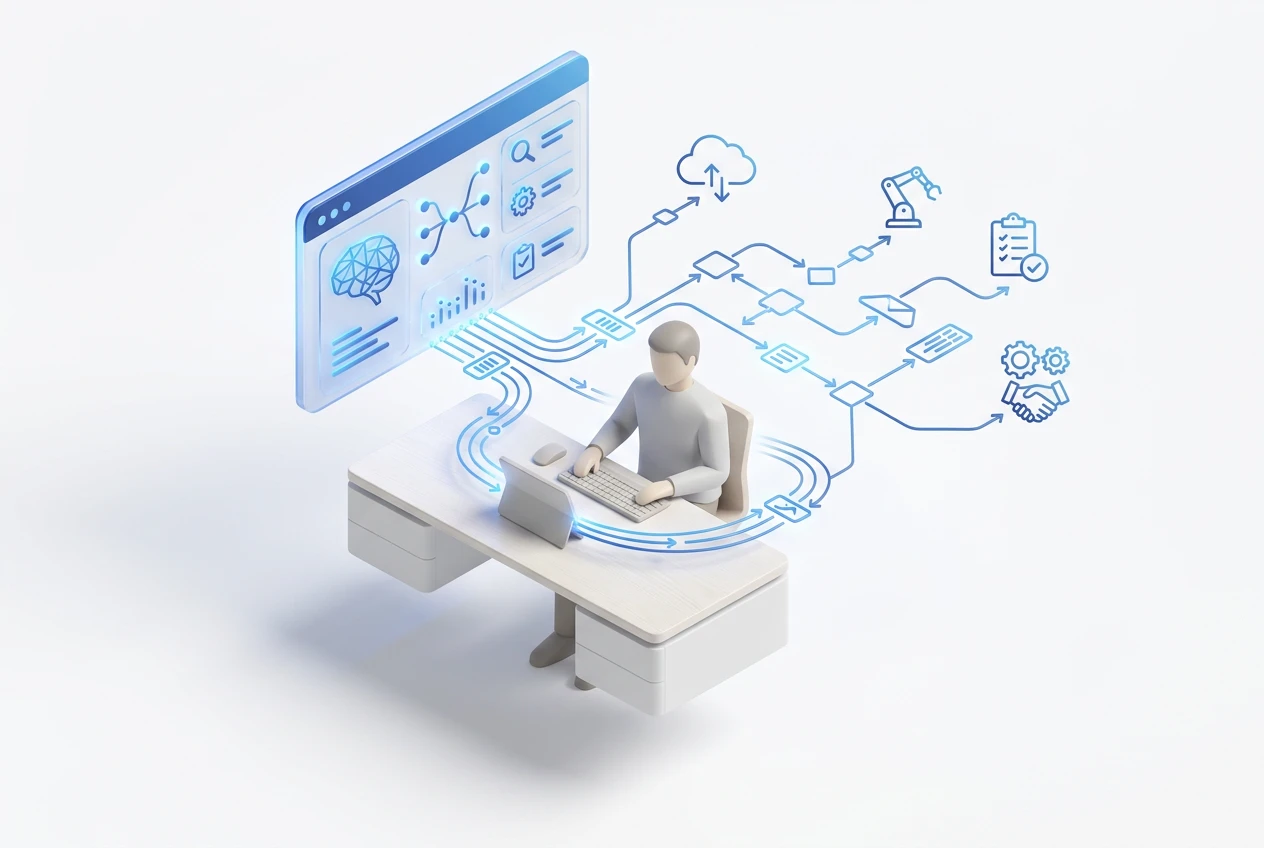
Let’s say a new customer places an order on your website. The task automation system automatically triggers a series of actions. First, the customer is registered in the customer relationship management (CRM) system. Second, the purchase order is sent to the inventory department. Next, an invoice is generated and sent via email. Finally, the customer is added to a targeted marketing mailing list. All these steps occur simultaneously and in a coordinated manner without any human intervention, ensuring that workflows are efficiently linked.
What are the challenges of implementing task orchestration strategies for companies?
Despite its benefits, implementing task orchestration presents challenges. The most significant challenge is the complexity of integrating legacy and modern systems, as compatible application programming interfaces (APIs) may not be available. Additionally, high-quality data is needed to effectively train AI models. Resistance to change among employees may also hinder adoption. Therefore, task orchestration strategies for businesses require careful planning and effective change management to ensure success.
How Can You Build Automated Digital Value Chains?
Building digital value chains begins with identifying the most impactful processes that can be automated. Follow these basic steps:
- Identify processes: Start by identifying labor-intensive, error-prone processes that span multiple departments.
- Analyze the workflow: Map out every step in the current process, and identify decision points and data transfers.
- Select tools: Choose an AI platform, such as the one offered by Lo-ol.AI, that can integrate with your existing systems.
- Phased Implementation: Start with a small pilot project to prove the concept and measure the return on investment before scaling up.
- Measurement and optimization: Use analytics to continuously monitor performance and optimize workflows.
What role do AI agents play in transforming operational processes?
AI agents are at the heart of transforming operational processes with artificial intelligence. These are not just chatbots; they are autonomous programs capable of performing complex tasks and making decisions. For example, an AI agent can monitor inventory levels, forecast future demand, and automatically place new purchase orders. Thus, they act as digital operations managers, coordinating tasks and optimizing performance around the clock.
How does Lo-ol.AI help you achieve this?
At Lo-ol.AI, we specialize in going beyond simple automation. We take an integration-first approach to building cohesive AI systems. Our AI workflow automation services go beyond executing individual tasks; they aim to design complete, autonomous operational processes. We ensure a measurable return on investment through our strategic AI agents, giving your company a real competitive advantage.
Frequently Asked Questions
What is the difference between complex automation and simple automation?
Simple automation performs a single, repetitive task, such as sending an email. Complex automation, or task orchestration, coordinates an entire chain of tasks across different systems and makes decisions based on data.
Do I need to replace all my current systems?
Not necessarily. Platforms like Lo-ol.AI take an “integration-first” approach, where your existing systems (CRM, ERP) are connected using APIs and smart agents.
How long does it take to see results?
Initial results from pilot projects can be seen within weeks. The full impact on operational efficiency becomes apparent after scaling up the automated solutions, and a significant return on investment is typically achieved within a few months.
What is the role of employees after task automation is implemented?
Employees’ roles shift from routine execution to strategic oversight and handling exceptional cases that require human creativity. This increases the value of their roles and boosts job satisfaction.
How do I start exploring task orchestration for my company?
The first step is to identify a key operational process that suffers from inefficiency or delays. Next, you can consult experts—such as our team at Lo-ol.AI—to assess feasibility and design a customized solution.
The shift toward AI-powered task orchestration is no longer an option—it’s a strategic necessity to stay ahead of the competition. By building smart, interconnected processes, you can achieve new levels of efficiency and innovation. Discover how our workflow automation services can transform your operations. Follow our latest insights on Facebook.