
What exactly is operational synchronization?
Simply put, operational synchronization refers to the coordination of all tasks and activities across a company’s various departments. The goal is to ensure that all parts work together seamlessly and efficiently. Therefore, when sales, finance, and manufacturing operate in harmony, the entire company benefits.
In the past, achieving this harmony relied on lengthy meetings and manual efforts. But today, artificial intelligence is completely changing the equation. As a result, companies are now able to achieve an unprecedented level of operational efficiency.
Why Is Operational Alignment Critical for Growth?
Operational alignment is not just a catchy management term; it is a strategic necessity. When operations are out of sync, problems quickly arise. For example, the marketing department might launch a campaign for a product that is out of stock.
In addition, a lack of alignment leads to wasted resources and increased costs. Conversely, alignment enables faster and more accurate decision-making. Consequently, companies can respond quickly to market changes and achieve sustainable growth.
How does artificial intelligence analyze workflows?
Artificial intelligence uses advanced algorithms to analyze vast amounts of operational data. First, it collects data from various systems such as Customer Relationship Management (CRM) and Enterprise Resource Planning (ERP). It then begins to identify patterns and bottlenecks.
For example, AI can detect that a specific delay in the procurement department is negatively impacting the entire production schedule. Through this in-depth analysis, it provides actionable insights to improve workflow and enhance operational efficiency.
What is the role of AI in coordinating operations?
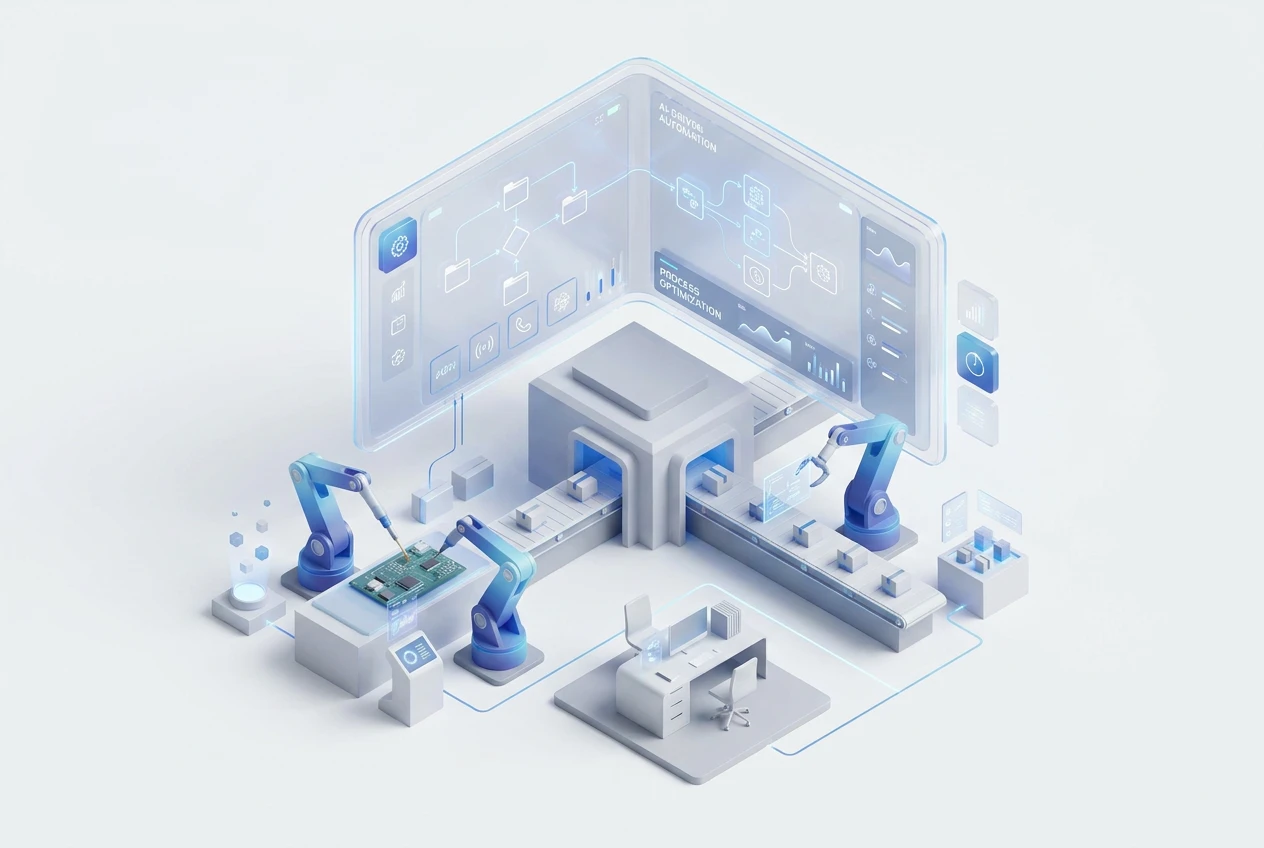
AI acts as a digital orchestra conductor. It does more than just analyze data; it also proactively coordinates operations. When the system detects a deviation from the correct path, it can trigger automatic alerts or even take corrective actions.
In particular, it can reschedule tasks or dynamically allocate resources to ensure business continuity. This level of real-time coordination reduces reliance on human intervention and ensures that operations run smoothly around the clock.
Can AI reduce operating costs?
Yes, significantly. One of the most notable benefits of synchronizing operations through AI is the reduction of operating costs. This is achieved in several ways. First, automation reduces costly human errors.
Furthermore, predictive analytics helps improve inventory management, thereby reducing excess inventory costs. Improving employee efficiency also means getting more work done with the same resources. Ultimately, all these improvements translate directly into higher profits.
Practical Examples of AI-Driven Process Optimization
There are practical applications in nearly every industry. In the retail sector, AI can synchronize real-time sales data with inventory levels and the supply chain. As a result, products are automatically restocked before they run out.
In the manufacturing sector, it can synchronize machine maintenance schedules with production plans to minimize unplanned downtime. These examples demonstrate how intelligent process coordination leads to tangible results. Lool AI offers customized solutions for such challenges.
How does process automation ensure a reduction in human error?
Process automation to reduce human error is one of the most important benefits of artificial intelligence. Humans, by nature, are prone to fatigue and loss of focus, which can lead to errors in data entry or the execution of repetitive tasks. Artificial intelligence does not suffer from these limitations.
Therefore, when automating tasks such as processing invoices or updating customer records, the system ensures 100% accuracy. This not only saves time and money but also frees up employees to focus on strategic tasks that require human creativity.
What are the steps to achieving alignment across company departments?
Achieving alignment across company departments requires a structured approach. It cannot be achieved overnight; rather, it is a long-term strategic investment. Experts like Lowell AI work with companies to effectively implement these steps.
Here are the key steps we follow to help our clients:
- Identify critical processes: We start by identifying the processes that have the greatest impact on the company’s performance.
- Collecting unified data: We ensure that data is collected from all relevant departments and systems.
- Implementing AI models: We develop and train custom models to analyze this data.
- System integration: We connect disparate systems to facilitate the automated flow of information.
- Smart task automation: We automate repetitive tasks to ensure accuracy and speed.
- Monitoring and Continuous Improvement: We use dashboards to monitor performance and continuously improve processes.
Frequently Asked Questions
What is the difference between automation and process synchronization?
Automation focuses on performing a single task repeatedly without human intervention. Process synchronization, on the other hand, is a broader concept aimed at coordinating and harmonizing all interconnected tasks and processes across the entire company using artificial intelligence.
Does artificial intelligence require a complex infrastructure?
Not necessarily. Modern solutions, such as those offered by Lowell AI, rely on a flexible and integrable infrastructure. You can start with small, specific projects and then scale up gradually, reducing the initial investment required.
How does Lowell AI measure return on investment?
We believe in measurable results. Before getting started, we define key performance indicators (KPIs) such as cost reduction, increased productivity, or reduced cycle time. We then track these metrics to provide clear reports on the financial return on investment in AI.
Does AI replace employees?
The goal is not to replace employees, but to enhance their capabilities. AI handles routine and tedious tasks, allowing employees to focus on innovation, solving complex problems, and interacting with customers—tasks that machines cannot perform.
How long does it take to implement process automation solutions?
The timeline varies depending on the size and complexity of the operations. Small pilot projects can take as little as a few weeks to demonstrate value. Comprehensive, company-wide projects, however, may take several months to achieve full integration and continuous improvement.
In conclusion, AI-powered process synchronization is the new engine of growth and operational excellence. By connecting systems, people, and data, you can achieve the operational harmony that sets leading companies apart. Are you ready to transform your operations? Discover how Loole AI solutions can help you achieve this. Follow us on Facebook to stay up to date on the latest developments.