
By building self-improving support systems, AI for customer service analyzes customer interactions to anticipate their future needs and instantly tailor solutions. This shift from reactive support to a predictive experience not only solves problems but also builds strong relationships and fosters loyalty. As a result, every interaction becomes an opportunity to enhance long-term customer value.
What is a self-improving support center?
A self-improving support center is a customer service system that uses artificial intelligence to continuously learn from every interaction. Instead of relying on pre-programmed rules, this system analyzes data to understand customer behavior and preferences. As a result, it becomes smarter and more effective over time.
These systems don’t just answer questions—they anticipate them. For example, if a customer is having trouble with a specific step, the system can proactively offer assistance. This approach significantly reduces the customer’s effort and increases their satisfaction.
How Is AI in Customer Service Changing the Game?
AI in customer service is revolutionizing the way companies interact with their customers. First, it enables 24/7 real-time support, eliminating long wait times. Furthermore, it ensures consistent service quality across all channels.
Most importantly, AI frees human employees from repetitive tasks. As a result, they can focus on solving complex problems that require a human touch. This combination of automated efficiency and human expertise creates a superior customer experience and fosters customer loyalty.
What is the difference between reactive support and predictive support?
Reactive support waits for the customer to initiate contact. It relies on the company’s response to a problem that already exists. In contrast, predictive support completely changes this equation. It uses data analytics to anticipate potential issues and address them before they affect the customer.
For example, a predictive system might notice that a customer is hesitating on the checkout page. It can then proactively display a help pop-up or offer a small discount to complete the purchase. This shift from reacting to taking proactive action is the essence of building strong, lasting customer relationships.
How does customer behavior analytics help boost loyalty?
Customer behavior analytics is the cornerstone of any successful AI strategy. By analyzing how customers interact with your website or app, you can identify pain points and opportunities. This data allows you to personalize the experience for each individual user.
When customers feel that a company understands their unique needs, their emotional connection to the brand deepens. Therefore, using analytics to personalize offers, recommendations, and solutions not only boosts sales but also builds a sense of appreciation and belonging—the foundation of true customer loyalty.
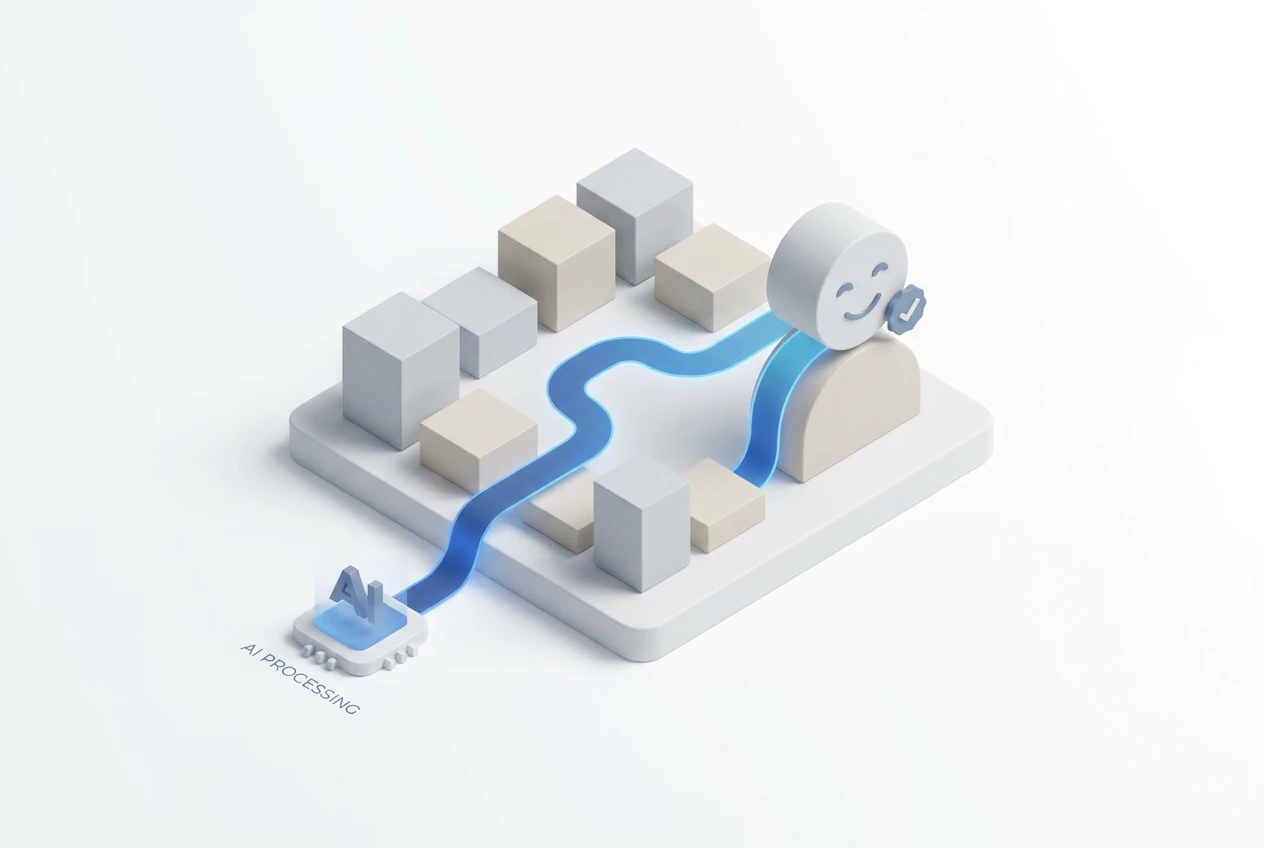
What are the first steps to building a self-improving support system?
Building a self-improving support system requires a strategic and well-thought-out approach. It’s not just about installing a chatbot. Instead, the focus should be on creating an intelligent infrastructure that evolves with your business. At Lo-ol.AI, we follow a systematic process to ensure success.
Here are the key steps we recommend:
- Define Key Objectives: First, clearly define what you want to achieve. Is it reducing response times, increasing customer satisfaction, or lowering support costs?
- Collect and consolidate data: Second, collect data from all customer touchpoints. This data must be clean and organized to feed your AI models.
- Selecting the Right Technologies: Based on your goals, choose the appropriate tools and platforms. At Lowell AI, we help you select and implement solutions that integrate with your existing systems.
- Training and Iterative Testing: AI models must be trained on your specific data. Afterward, they must be continuously tested and optimized to ensure their accuracy and effectiveness.
- Monitoring and Continuous Improvement: Finally, a self-improving system requires continuous monitoring. Analyze performance and adjust strategies to achieve the best possible results.
How Is the Return on Investment in Customer Experience Automation Measured?
Measuring the ROI of support automation is vital to demonstrating the project’s value. ROI can be measured through various metrics, both financial and non-financial. First, there are direct cost savings, such as a reduced need for a large support staff and shorter handling times per ticket.
In addition, the impact on revenue must be measured. For example, track increases in conversion rates or average order value as a result of proactive support. Furthermore, metrics such as Net Promoter Score (NPS) and Customer Satisfaction (CSAT) are strong indicators of increased customer loyalty and Customer Lifetime Value (CLV).
What role do strategic agents play in intelligent support systems?
At Lo-ol.AI, we don’t just build chatbots. We develop strategic AI agents. The difference is significant. A strategic agent isn’t just a FAQ interface—it’s an integral part of your business strategy. It’s designed to achieve specific goals, such as increasing sales or improving customer retention.
These agents use customer behavior analytics to understand context and customer intent. As a result, they can provide personalized recommendations, guide users through complex processes, and even escalate conversations to human agents at exactly the right moment. They represent a true evolution in customer experience automation.
What Does the Future of Customer Loyalty Look Like as AI Evolves?
The future of customer loyalty increasingly relies on highly personalized and proactive experiences. As AI for customer service evolves, companies will be able to build one-on-one relationships with millions of customers simultaneously. This level of personalization was impossible in the past.
Companies that adopt these technologies now will be the leaders of the future. Loyalty will no longer be merely the result of a good product; rather, it will stem from a seamless, integrated experience that makes the customer feel valued and understood. Therefore, investing in smart support systems today is an investment in the survival and growth of your brand tomorrow.
Frequently Asked Questions
How does artificial intelligence help increase customer loyalty?
By personalizing interactions, anticipating needs, and proactively resolving issues. These positive and consistent experiences build customer trust and emotional connection to the brand, leading to increased loyalty.
Do AI systems replace human employees?
No, they actually enhance their capabilities. AI handles repetitive and routine tasks, allowing employees to focus on complex issues that require empathy and critical thinking, thereby improving overall service quality.
What is the cost of building a self-improving support system?
The cost varies depending on the size of the company, the complexity of existing systems, and the specific objectives. Lo-ol.AI focuses on delivering solutions with a measurable return on investment, ensuring that the value delivered exceeds the cost.
How long does it take to implement an AI solution for customer service?
The timeline depends on several factors, including the quality of available data and the complexity of the required integration. Projects can range from a few weeks for the initial phases to several months for full implementation and continuous improvement.
What sets Lo-ol.AI’s integration approach apart?
We take an “integration-first” approach. This means we design AI solutions to work seamlessly with the customer relationship management (CRM) systems, e-commerce platforms, and other tools you already use, ensuring that your current workflows remain uninterrupted.
The shift toward a self-improving support center is no longer an option—it’s a competitive necessity. Adopting AI to boost customer loyalty is a strategic investment that ensures sustainable growth. Start your journey toward an exceptional customer experience today. Discover how our experts at Lowell AI can help you achieve your goals through our integrated services. You can also follow our latest insights on our Facebook page.