
A digital employee is a fully integrated AI agent that interacts across multiple systems, such as CRM and ERP. Unlike simple automation, it makes complex decisions, learns from data, and manages entire workflows. As a result, it frees up your human team to focus on innovation and strategic growth rather than repetitive, time-consuming tasks. This transformation is the essence of modern efficiency.
What exactly is a digital employee?
A digital employee is not a physical robot. Rather, it is an advanced software program that uses artificial intelligence to perform complex office tasks. It mimics human capabilities such as understanding, decision-making, and learning. Additionally, this intelligent agent works seamlessly across different applications and software. Therefore, it can complete entire processes from start to finish without human intervention.
How does a digital employee differ from Robotic Process Automation (RPA)?
Robotic Process Automation (RPA) is great for repetitive tasks based on fixed rules. However, it falls short when faced with exceptions or unstructured data. In contrast, a digital employee uses artificial intelligence and machine learning to understand context. Consequently, it can handle variables and make intelligent decisions. It represents an evolution from simply ‘performing’ tasks to ‘understanding’ processes.
What are the core components of a digital employee?
A digital employee consists of several technologies working together. First, there is the automation engine that executes tasks. Second, there are AI models that enable it to understand language and process documents. Furthermore, it has robust integration capabilities to connect with your existing systems such as ERP and CRM. Finally, the dashboard and analytics ensure full transparency into its operations.
What types of tasks can be automated?
Digital employees can handle a wide range of tasks. These include automating routine tasks such as data entry and invoice processing. Additionally, they can manage more complex processes such as onboarding new employees or handling customer service inquiries. Essentially, any process that requires coordination across multiple systems and simple decision-making is an ideal candidate for automation.
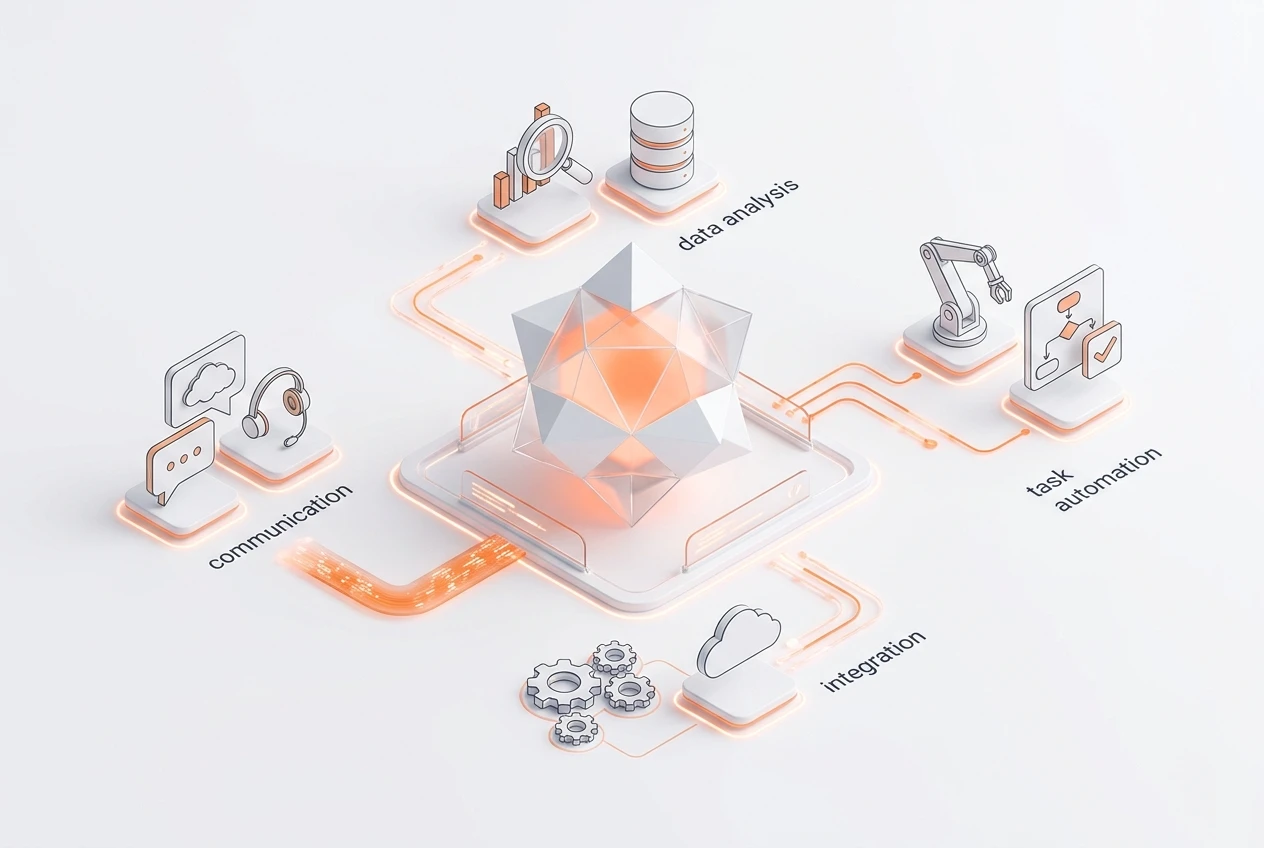
How does a digital employee contribute to smart system integration?
One of the biggest challenges in companies is the existence of systems that do not communicate with one another. The digital employee acts as a bridge between these siloed systems. It can pull data from a customer relationship management system, update it in an enterprise resource planning system, and then send a confirmation email. Consequently, smart system integration provides a unified view of data and significantly reduces manual errors.
What are the benefits of implementing digital employees?
The benefits go beyond mere cost savings. By automating complex tasks with artificial intelligence, you can achieve higher levels of accuracy and efficiency. Furthermore, digital employees work 24/7 without getting tired. This frees up your human employees to focus on strategic tasks that require creativity and critical thinking, fostering innovation and employee satisfaction.
- Increased efficiency: Complete tasks faster and with fewer errors.
- Cost reduction: Minimize the need for manual labor in repetitive processes.
- Improved accuracy: Eliminate human errors in data entry and processing.
- Scalability: Easily add more digital employees to meet growing demand.
- Enhanced employee satisfaction: Freeing teams from tedious tasks so they can focus on value-added work.
- 24/7 availability: Ensuring uninterrupted business continuity.
How do companies start adopting digital employees?
A successful start requires a strategic approach. First, identify processes that are time-consuming and highly repetitive. Next, assess the expected return on investment (ROI) from automating that process. Companies like Lo-ol.AI work with you to identify these opportunities and design a customized solution. Starting with a small pilot project is an excellent way to prove value before scaling up.
What is the future of AI agents in the workplace?
The future is moving toward deeper collaboration between humans and AI agents. Digital employees will not replace humans, but rather enhance their capabilities. They will act as intelligent assistants, handling administrative tasks and providing data-driven insights. As a result, human teams will become more strategic and innovative. At Lo-ol.AI, we are building this future today through AI-powered process automation solutions.
Frequently Asked Questions
What is a digital employee in business?
A digital employee is a software agent that uses artificial intelligence to perform complex office tasks, interact with multiple systems, and make data-driven decisions.
Does a digital employee require constant supervision?
No, after initial setup and training, the digital employee works independently. It is designed to handle exceptions and request human assistance only when absolutely necessary.
What is the difference between a digital employee and a chatbot?
A chatbot focuses primarily on interacting with users through conversation. In contrast, a digital employee focuses on executing back-end business processes across various systems.
How long does it take to implement a digital employee?
The time depends on the complexity of the process. Simple projects can be launched within a few weeks, while more complex processes may take a few months to design, test, and deploy.
How does Lo-ol.AI ensure a return on investment?
At Lo-ol.AI, we start with a thorough analysis of your processes to identify the automation opportunities with the highest impact. We focus on delivering solutions that achieve measurable time and cost savings, ensuring a clear return on your investment.
Adopting a digital workforce isn’t just a step toward efficiency—it’s a strategic investment in your company’s future. By automating routine tasks, you can empower your team to reach their full potential and drive growth. Discover how Lo-ol.AI’s AI agent solutions can revolutionize your operations today. Follow us on Facebook to stay updated.