
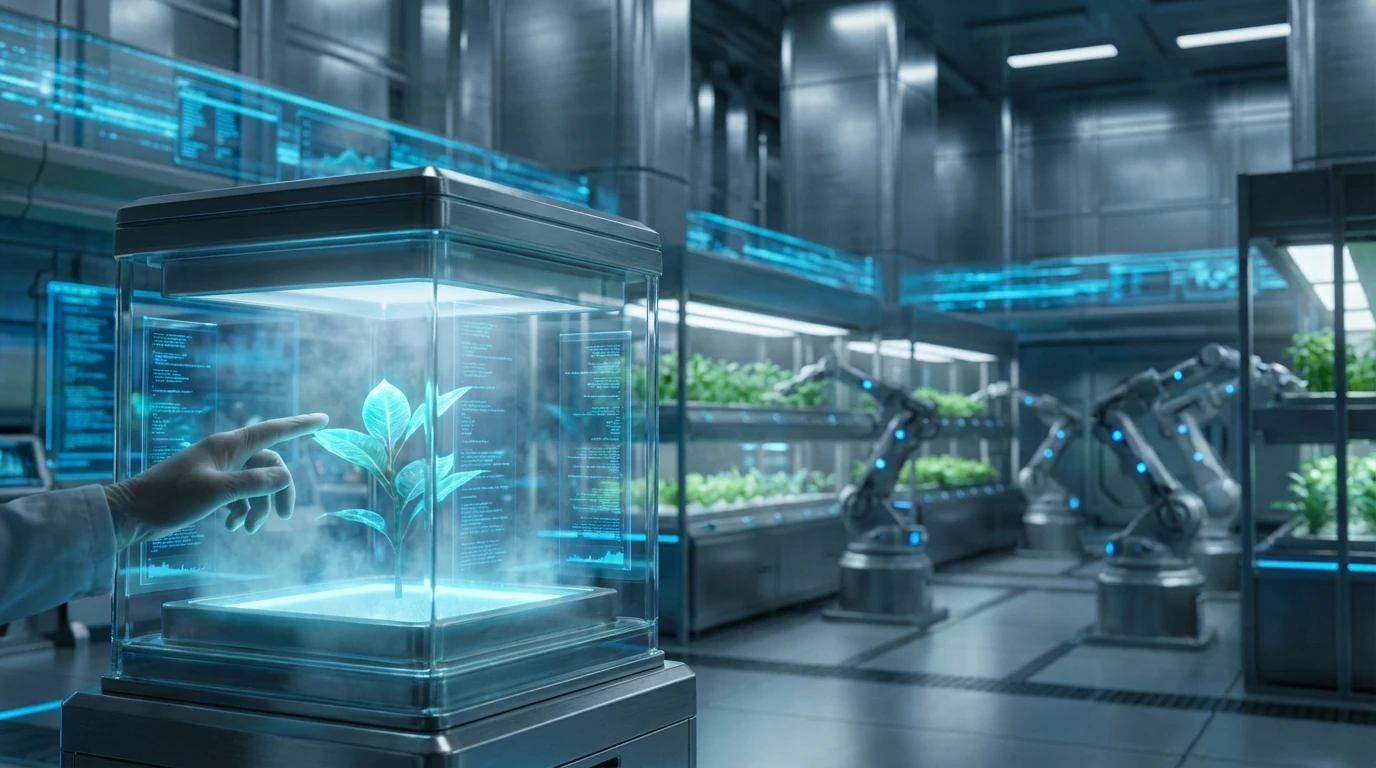
Have you ever worried that accelerating technology might strip your business of its true spirit? In the midst of the digital revolution, a fundamental question echoes in the minds of managers and entrepreneurs: Will artificial intelligence eliminate human communication? The fear that algorithms will replace human empathy is a legitimate one, and it often leads to resistance to change, causing companies to miss out on tremendous opportunities for growth. But the reassuring truth is that artificial intelligence and the human touch are not adversaries in a battle arena; rather, they are complementary partners. Automation is not here to steal our jobs, but to free us from routine tasks, so that we can focus on what really matters: creativity, empathy, and relationship building.
Why is the relationship between artificial intelligence and the human touch a necessity? In today’s business world, choosing between complete automation or total reliance on humans is no longer a logical option. Success lies in balance. Combining artificial intelligence and the human touch creates a highly efficient operating model. Artificial intelligence excels at speed, accuracy, and data processing, while humans are unique in their emotional intelligence and ability to understand complex contexts.
When human teams are freed from repetitive and tedious tasks, they do not become idle, but rather more productive and focused on strategic tasks that require critical and creative thinking. This shift is the essence of what we call “humanizing technology”; that is, adapting machines to serve humans and enhance their capabilities.
Automation and routine tasks: freeing humans from monotony Imagine how much time is wasted every day entering data, scheduling appointments, or answering the same simple questions hundreds of times. This is where artificial intelligence comes in as a savior, not a replacement. By embracing automation, companies can transform these tasks into intelligent systems that operate around the clock. How does artificial intelligence enhance human capabilities? Instead of replacing employees, artificial intelligence tools play the role of a “super assistant” that does the following:
- Sorting and analyzing data: Providing accurate insights that help managers make informed decisions quickly.
- Immediate support: Handling initial customer inquiries via chatbot and transferring complex cases to the appropriate employees.
- Precise personalization: Analyze customer behavior to enable employees to provide offers and services tailored to the customer’s needs.
Hybrid customer experience: The golden equation
Today’s customers expect speed, but they also crave understanding. Hybrid customer experience is the ideal solution, combining the speed of automated response with the warmth of human communication. Nothing angers a customer more than talking to a robot that doesn’t understand their complex problem, and nothing pleases them more than having their simple problem solved in seconds without waiting for an employee.
To achieve this balance, the customer journey must be designed so that artificial intelligence handles the initial and routine points of contact, while the human element intervenes at critical moments that require negotiation, empathy, or solutions to unfamiliar problems. This is the true meaning of the concept of artificial intelligence and the human touch in customer service. The role of the lo-ol.ai platform in enhancing the human element The lo-ol.ai platform is specifically designed to enable companies to automate complex and routine processes, giving your teams the space to focus on what they do best: innovation and customer engagement. With our advanced solutions, we help you bridge the gap between technical efficiency and human emotion, ensuring your brand stays close to your customers’ hearts and minds.
The future of human jobs: evolution, not extinction
It’s natural for the term “artificial intelligence” to raise concerns about the future of human jobs. But history tells us that technology changes the nature of jobs, it doesn’t eliminate the need for human labor. Jobs that rely on automated repetition will disappear, but new jobs will emerge that focus on managing these intelligent systems, analyzing their outputs, and applying them creatively and ethically. In the near future, employees will not be competitors to machines, but rather their managers. The ability to work with artificial intelligence tools will be an essential skill, just like computer skills are today. Therefore, investing in learning how to integrate artificial intelligence and the human touch is the best professional investment one can make.
Conclusion: Technology at the service of humanity
In conclusion, we must always remember that technology is a means, not an end. The goal of all this development is to improve the quality of life and work. Integrating artificial intelligence and the human touch is the only way to build sustainable, resilient organizations that are loved by their customers. Don’t fear automation; embrace it to save your time and effort for what really matters. Are you ready to take your business to the next level of efficiency while maintaining its human spirit? Start exploring our innovative solutions today. And don’t forget, for more tips and news on the latest AI technologies, follow us on Facebook and become part of our growing community.